
IT, the architecture of success - Part 2
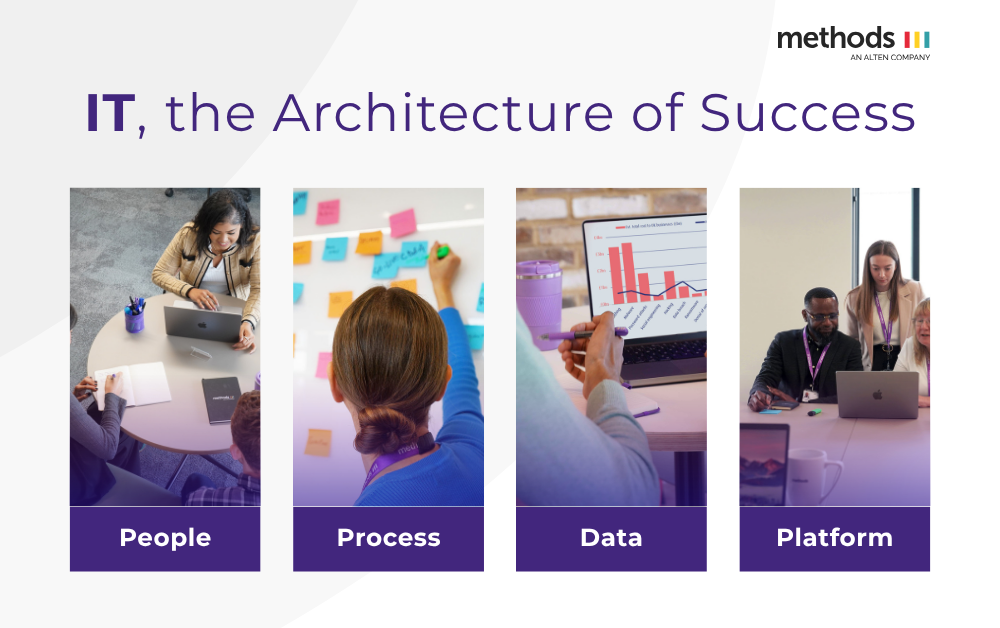
People & Organisation - The Foundation
This series is written for leaders and practitioners responsible for service outcomes, whether you’re assessing your next platform investment or trying to get more value from the one you already have. Part 2 focuses on the foundation: People and Organisation.
People and organisational design form the bedrock of service excellence. If decision-making is unclear, incentives are misaligned, or teams are structured around internal convenience rather than end-to-end services, any platform will struggle - no matter how capable it is.
The Architecture of Empathy: Who Are Your Stakeholders?
The essential first step is to move beyond simply listing names and departments and truly understand the stakeholders. In an architecture context, this means defining three critical groups:
-
The Service Consumers: These are the internal and external customers whose pain points you are trying to eliminate. Their daily frustrations—a confusing request portal, slow resolution times, or needing to email multiple departments—are the raw data for your blueprint.
-
The Service Providers: The teams on the front lines, often IT, HR, or Facilities. If the platform doesn't make their job simpler, faster, and less frustrating, they will resist adoption, no matter how elegant the solution.
-
The Leadership/Sponsors: Those who hold the budget and define the strategic 'why'. A successful architecture initiative requires unwavering commitment from the top to enforce new processes and break down established structures.
The Silo Barrier: Why Structure Matters
The greatest threat to service velocity is a siloed organisational structure. When key functions operate as separate kingdoms with incompatible processes, the customer experience becomes a frustrating, fragmented journey. A Solution Architect must be a cultural revolutionary, designing systems that force cross-functional collaboration.
Instead of defining technology based on departmental needs, define it based on the end-to-end service journey. This requires changing the organisational mindset from 'What is my team's process?' to 'How does our customer get from A to Z?' This shift is uncomfortable, but it is necessary to move from being "order takers" to "value creators".
Example: Software Asset Management (SAM)
A perfect illustration of this organisational friction is Software Asset Management (SAM). Effective SAM requires collaboration, yet it often fails because it is structurally isolated. The critical first step for SAM is not license counting, but successfully inserting it into the existing business process where software is purchased and packaged for deployment onto a laptop. This requires forcing alignment between three historically siloed groups: Procurement/Finance (who authorises the purchase), the technical packaging team (who prepares the software for deployment), and the IT Service Desk (who handles the request). When these people and teams operate separately, software is purchased without technical validation and deployed without proper license management, instantly creating compliance risk and budgetary waste—a failure of people and structure, not technology.
The Cultural Blueprint
Ultimately, the goal of the "People" stage is to achieve alignment.
If the people don't understand the "why," the "how" doesn't matter.
This alignment must deliver two things before moving to the Process layer:
- Shared Vision: Everyone understands that the goal is not to implement a tool, but to deliver great service.
- Clear Accountability: Roles and responsibilities must be redefined to support the integrated service architecture, ensuring there are no gaps or overlaps in the customer journey.
Only when the people are aligned, the pain points addressed, and the organisational structure ready to support collaboration, can you move on to designing the Process.
Leader’s prompt: For one priority service, ask: “Who is accountable for the end-to-end outcome?” and “Which team will feel the pain of this change first?” If accountability is split, adoption will be, too.
Next week (Part 3): Process - the blueprint. We’ll show how to map the end-to-end journey, remove non-value-added steps and design for repeatability before you automate.
Mark Lowther
Mark Lowther is a Solution Architect and digital strategist, dedicated to helping large-scale organisations navigate the complexities of technical change. Currently a Principal Solution Architect at Methods, Mark leverages his extensive experience in systems design and digital delivery to solve some of the most pressing technological challenges facing organisations. From high-level architectural blueprints to the nuances of agile implementation, he is an expert at aligning business goals with robust technical frameworks based on over 30 years of delivery of highly robust and complex IT Services in across Central Government, Energy and Financial Services.